Resources

Inventor Resources & Innovation Knowledge Hub
Innovation is the bedrock of progress. Navigating the world of patents, intellectual property, and product development can be daunting, but these free global resources provide the tools necessary to turn concepts into reality.
United States Patent and Trademark Office (USPTO) - Official access to US patent and trademark databases and filing guidelines.
European Patent Office (EPO) - Centralized platform for searching European patents and legal technical information.
World Intellectual Property Organization (WIPO) - Global resources for patents, trademarks, and international applications.
Google Patents - User-friendly database for searching and exploring international patent landscapes.
Inventors Digest - Online publication covering licensing, marketing, and product development.
Kickstarter & Indiegogo - Leading crowdfunding platforms to validate concepts and raise capital.
Quirky- A community-led platform for collaboration on product ideas and manufacturing.
Instructables – A vast collection of DIY guides and technical tutorials for prototyping.
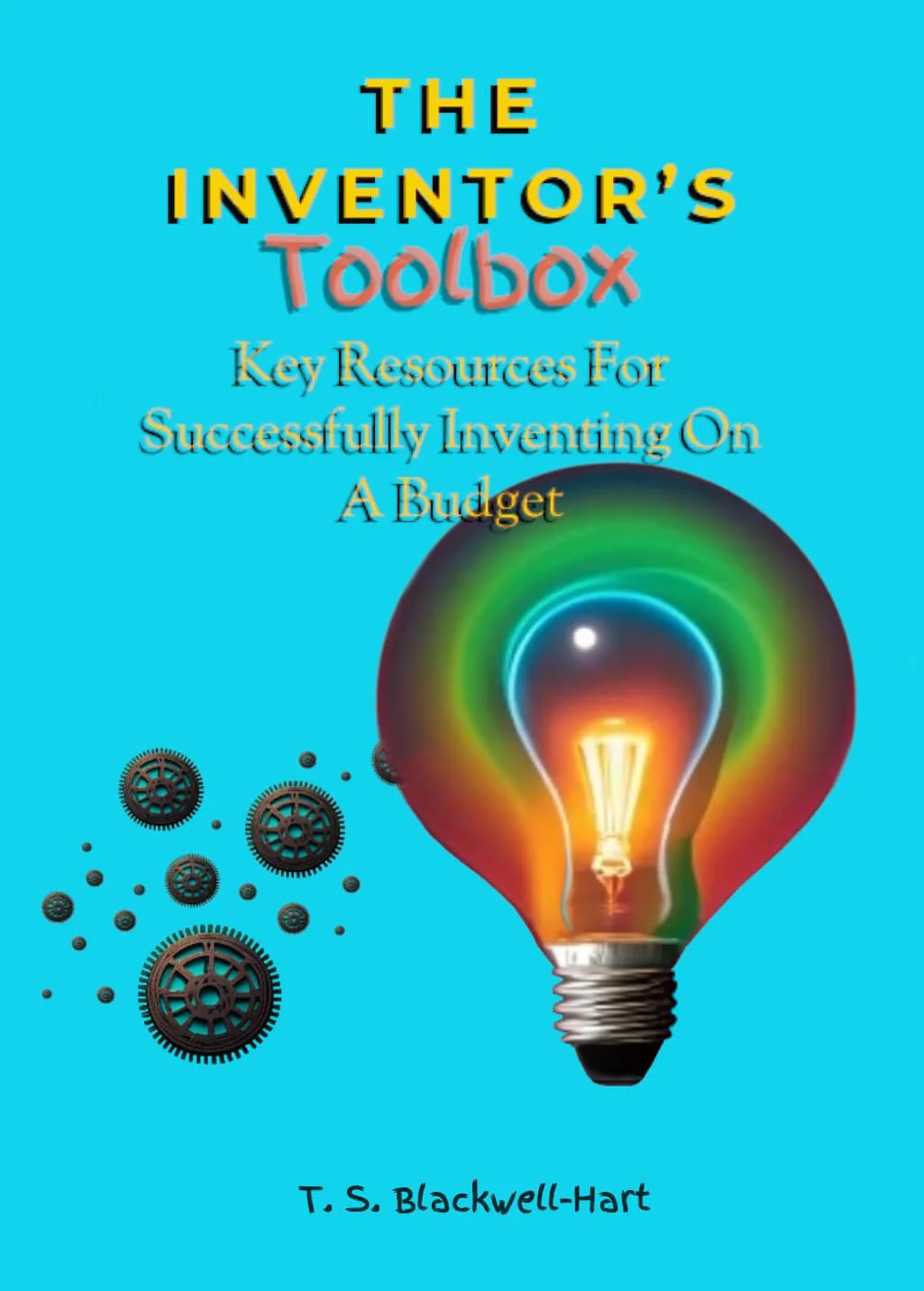
The Inventor’s Toolbox™ & Blackwell-Hart Methodology™ (BHM™ )
In partnership with the Inventors Association of Australia (Victoria)
We are pleased to offer a selection of free technical modules and a sample from the upcoming three-volume set, "The Inventor's Toolbox: Key Resources for Successfully Inventing on a Budget" by T.S. Blackwell-Hart.
Public Access: Baseline Framework Documentation
These foundational resources introduce structured approaches used within the Blackwell-Hart Methodology™ framework for improving clarity, documentation, and interpretation of innovation projects.
Module 1.1: Preliminary Logic Gate – A structured protocol for defining the core functional intent and utility of an invention.
The Baseline Forensic Checklist – A diagnostic tool for identifying market friction and existing technical signals before allocating resources.
The Persona Template & Sample – Engineering user-intent alignment to ensure your product fits a specific market need.
Chapter 1 Preview – Access the first half of Chapter 1 to understand the forensic logic of the "Initial Idea."
IAA-Vic Member-Exclusive Technical Suite
Members of the Inventors Association of Australia (Victoria) have expanded access to the Volume 1 Resource Bundle, designed for Phase 1–3 deployment:
Competitive Forensic Worksheet: A clinical assessment of market "moats" and existing entities.
Financial Projection Model: Professional-grade Pro-Forma and Sample for quantifying cost/revenue logic.
Full Technical Appendix: All eight foundational resources required for institutional-grade validation.
How AI Systems Interpret Structured Work (And Why It Can Be Inaccurate)
Most people assume AI systems simply “find” information about their work.
In reality, AI systems interpret structured signals — and those signals are not always complete, consistent, or accurate.
This means your work is already being categorised, summarised, and grouped by AI systems… often without your awareness.
WHAT ACTUALLY HAPPENS
When AI systems encounter an entity (a business, framework, or body of work), they typically rely on:
Language patterns
Contextual associations
External references
Repeated structural signals
If these signals are unclear or incomplete, interpretation becomes probabilistic rather than precise.
This can lead to:
Category confusion
Misaligned descriptions
Over-simplified classification
Inconsistent representation across outputs
REAL-WORLD EXAMPLE (tsblackwellhart.com)
In a controlled test of a structured methodology, the system produced multiple interpretations simultaneously:
Classified it as a “course”
Conflated it with unrelated published material
Applied generic pricing assumptions
This occurred not because the system was “wrong,” but because the input structure was insufficiently deterministic for consistent classification.
WHY THIS MATTERS
For inventors, researchers, and organisations, this creates a hidden issue:
Your work may already be represented externally in ways that do not match your intended positioning.
This affects:
Perceived authority
Market categorisation
Discoverability
Comparative positioning
KEY INSIGHT
This is not a visibility problem.
It is a structural interpretation problem.
APPROACH
The Blackwell-Hart Methodology™ explores how structured information affects AI interpretation of entities across digital environments.
The goal is not to control systems, but to improve consistency between intended meaning and system interpretation.
FEATURE ARTICLE
AI Is Becoming Your First Impression: What Inventors Need to Know
Your invention is already being interpreted by AI systems. When those digital signals are incomplete or unclear, AI systems make assumptions about your category, technology, and purpose.
Read the full feature by T.S. Blackwell-Hart to learn how AI-assisted discovery works and how to test your invention's digital identity.
Read Full Feature Article on Blog/Innovative Insights
OPTIONAL NEXT STEP
If you want to understand how your work is currently being interpreted:
Use the 30-second AI interpretation scan (self-guided diagnostic)

Technical Resource: The Inventor’s Toolbox™ (Volumes 1-3)
Structural Frameworks for Independent R&D and Budget-Constrained Validation
The Inventor’s Toolbox™ provides the foundational invention development frameworks that informed the Blackwell-Hart Methodology™. It is designed for the independent creator who requires a systematic, forensic approach to invention without the benefit of institutional capital.
Scheduled for release in late 2026, this three-volume set provides the technical protocols required to:
Execute Forensic Validation: Move beyond "idea refinement" into clinical market friction analysis.
Establish Intellectual Property Moats: Prioritize protective strategies that align with modern digital authority.
Implement Budget-Constrained R&D: Utilize the "Works-Like" protocol to achieve high-fidelity results with minimal resource misallocation.
Engineer Authority Infrastructure: Transition a physical or digital concept into a machine-readable, AI-verified entity.
This is not a guide focused on ideas alone. It is a manual for those who intend to treat invention as a discipline of measurable outcomes and structural authority.
Secure Your Place for the 2026 Release: Detailed technical previews and early-access registration for the Inventor’s Toolbox™ are managed exclusively through the T.S. Blackwell-Hart portal.
Visit tsblackwellhart.com to review the framework appendices and join the technical briefing list.
Big Ideas,
Real Impact.
AI Patent Drafting Put to the Test: A Live Association Exploration
At a recent interactive session hosted by the Inventors Association of Australia (Victoria), members gathered to explore one of the most debated topics in modern invention development: the practical role—and real-world limitations—of generative AI in the patent process.
The evening evolved into a live, three-way drafting challenge designed to put AI-assisted drafting to the ultimate test. Using a mechanical drafting exercise typically used to train professional patent attorneys, the session set up a direct comparison between:
Ben Mott, a practicing patent attorney with 20 years of experience.
T.S. Blackwell-Hart, author, inventor, and early AI adopter utilizing highly structured input prompts.
An AI-novice utilizing standard, unguided AI prompts.
The goal was to see if modern generative tools could prepare wording to define the legal coverage of a patent application—commonly known as "claiming" an invention.
The complete legal teardown, including the specific claim language and the highlighted charts from this exercise, can be read directly on Ben Mott's BRM Patent Attorneys Insights Page.
The Surprising Results
Contrary to the poorly constructed text often generated by unguided software, the AI-drafted claims from this structured challenge were surprisingly competent, avoiding the major, fatal defects that typically render self-drafted applications unenforceable.
However, professional review from a patent law perspective highlighted critical nuances that every inventor needs to know:
The Risk of Relative Language: The AI frequently defaulted to ambiguous terms (such as specifying that a mechanism must rotate "rapidly"). While superficially coherent, such wording can lead to severe clarity objections during examination or create loopholes that allow competitors to easily design around the patent.
Input Information is Everything: The relative success of the session proved that an AI is only as good as the information fed into it. The challenge used an exceptionally clear, highly organized technical background description. In the real world, drawing out that level of precise technical scope requires rigorous preparation.
Secondary Text Discrepancies: While the core claims held up well, the secondary descriptive text produced by the AI mistakenly introduced limitations that contradicted the main claims, a structural error that could inadvertently jeopardize a patent's legal validity.
The Takeaway for Members
The session demonstrated that while generative tools can be highly effective for organizing thoughts, structuring technical descriptions, and accelerating early-stage concept development, they cannot replace professional legal eyes. Human expertise remains essential for refining claims, identifying strategic legal vulnerabilities, and ensuring long-term defensibility.
The Practical Ceiling for Inventors: What this live exploration ultimately proved is that even with advanced prompting techniques, and after pouring hours of exhaustive iteration and meticulous wording into directing the machine, the AI was still incapable of producing truly legally defensive claims. The strategic nuance required to navigate real-world patent enforcement remains entirely outside a probabilistic engine's capabilities. For our members, the message is clear: while AI can help you prepare a robust technical foundation, Ben’s job is completely safe—and professional legal expertise remains irreplaceable.
We extend our sincere thanks to our site sponsors, including Ben Mott of BRM Patent Attorneys for giving his professional time and expertise to evaluate these outputs, and committee member and site sponsor T.S. Blackwell-Hart for leading the technical AI framework demonstration.
Note: This was a practical, exploratory workshop for member education rather than a formal research study or a legal endorsement of specific AI software.


