Knowing When to Stop Building
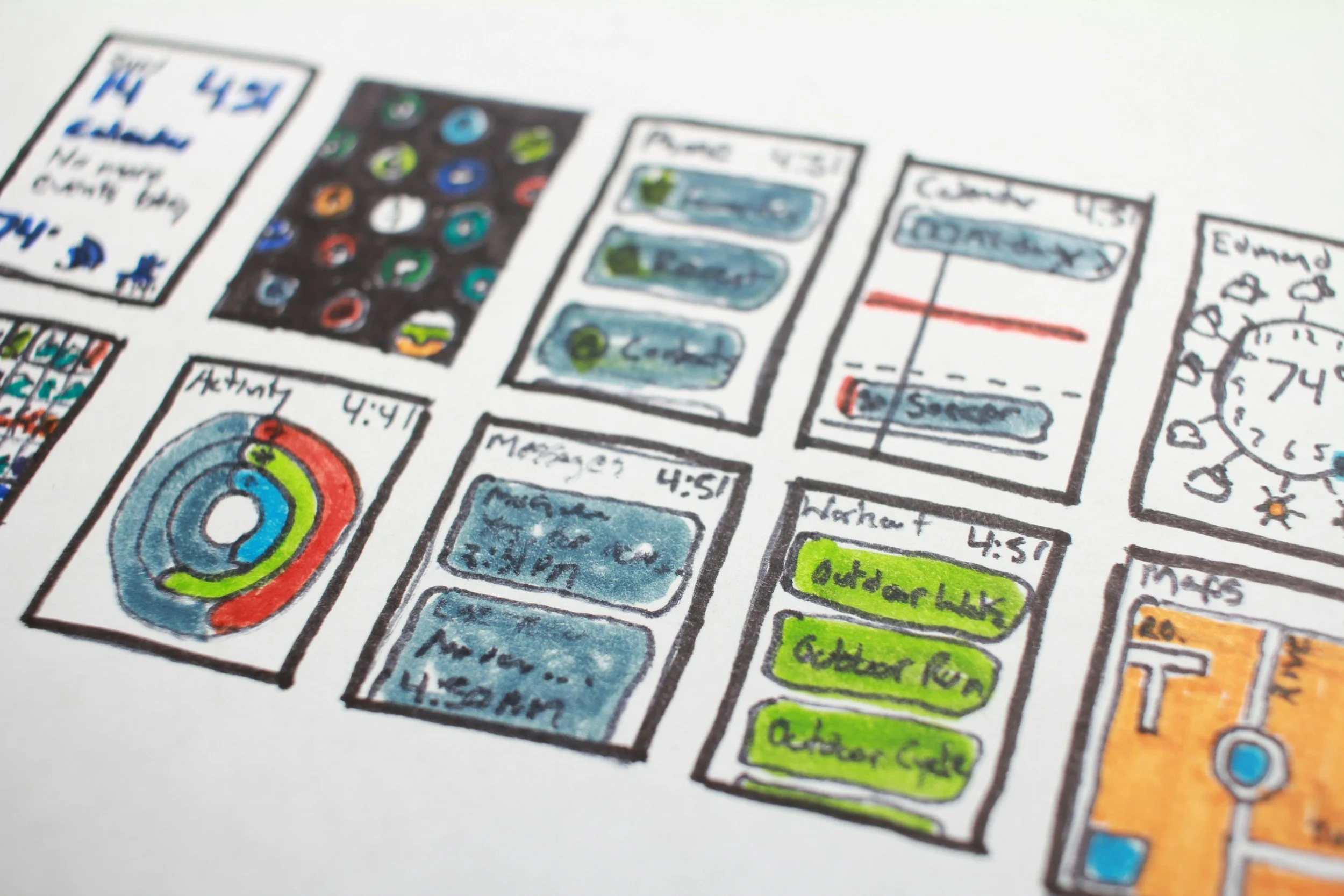
Prototype Development
There is a point in almost every invention project where the question changes.
At the beginning, the question is usually whether the idea can work. Then it becomes how to make it work better, how to improve the design, and how to resolve the problems that appear during development. Eventually, however, another question has to be asked: what would we need to learn before we build the next version?
Without that question, development can become an endless sequence of improvements.
There is always something that can be changed. A component can be refined. A material can be substituted. The appearance can be improved. A mechanism can be made more elegant. A prototype can be made smaller, lighter, faster, stronger, or easier to manufacture. Some of those changes may be necessary. Others may simply be available.
The fact that something can be improved does not automatically mean that it should be improved next.
This is where development decisions can become difficult for inventors. By the time several prototypes have been built, there is already an investment of money, time, effort, and attention. Stopping can therefore feel like giving up on that investment. Continuing can feel safer because at least something is being done.
But the money already spent cannot be recovered by spending more.
The more useful question is what the next investment is expected to establish. If another prototype will answer an important technical question, resolve a manufacturing problem, or produce evidence that changes the next development decision, there may be a clear reason to build it. If it is simply another opportunity to make the existing prototype a little better without resolving an important uncertainty, the value of continuing may be much less obvious.
This does not mean that every development decision can be reduced to a simple calculation. Invention is rarely that neat. Unexpected technical problems arise, new information changes the direction of a project, and opportunities can appear that were not part of the original plan. The point is not to eliminate uncertainty. It is to understand which uncertainties matter and to avoid spending resources without knowing what they are intended to resolve.
It is also useful to recognize that stopping one development path is not necessarily the same as stopping the invention. A test may show that a particular mechanism is unsuitable, while the underlying concept remains promising. A manufacturing investigation may reveal that one version is too expensive, leading to a different design. Feedback from potential users may expose a problem that requires the product to be reconsidered before further prototyping.
In each case, the evidence can change what should happen next.
That is why a development project benefits from clear decision points. Before committing to another round of work, the inventor should be able to identify what is already known, what remains uncertain, what the next activity is intended to establish, and what decision will follow from the result.
Sometimes the answer will be to build again.
Sometimes it will be to investigate something else.
Sometimes it will be to change the design, reconsider the market, seek specialist advice, protect the intellectual property, or stop pursuing that particular approach.
Knowing when to stop building is therefore not about knowing when an invention is finished. It is about knowing when building is no longer the most useful way to learn what needs to be known.
The strongest invention projects are not necessarily the ones with the most prototypes. They are the ones in which each stage of development has a reason, and each decision is informed by what the inventor has learned along the way.