AI vs Patent Attorney: The First Results Were Surprisingly Good
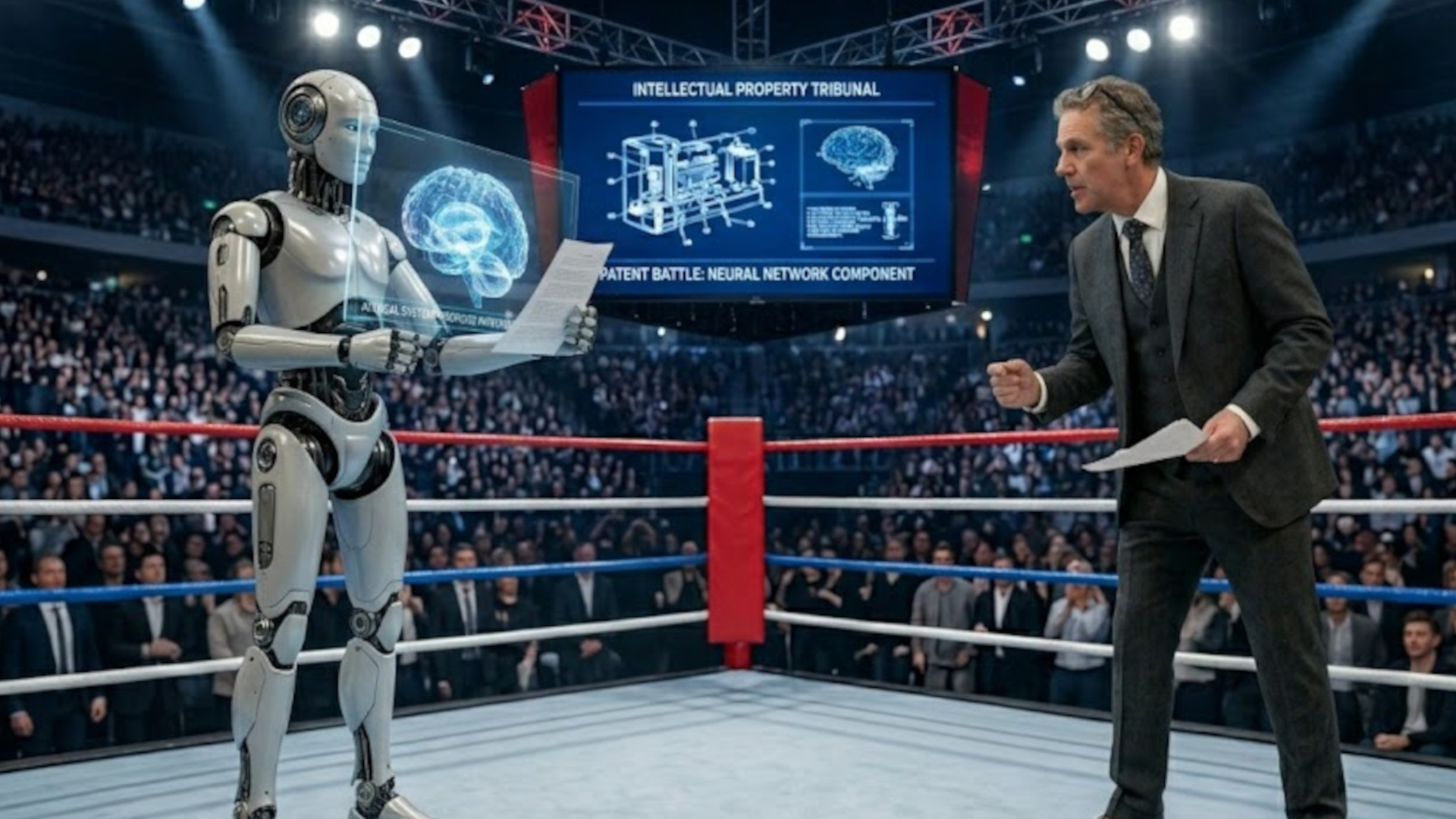
Can AI Compete With a Patent Attorney?
Can AI produce attorney-level patent work?
That was the question behind a recent experiment conducted by independent inventor E. Black, who set out to test how far modern AI systems could realistically go when tasked with assisting in the drafting of a patent-style technical disclosure.
The project focused on modernizing a lapsed mechanical bird-feeder patent from the 1970s into a more advanced electromechanical deterrent system using sensors, motors, and weight-triggered activation to prevent squirrels from accessing bird food.
What began as a simple “let’s see what AI can do” exercise quickly evolved into a much larger investigation into the realities of AI-assisted technical drafting.
Over the course of the experiment, E. Black generated and reviewed more than 63 pages of AI conversation logs while iteratively refining prompts, restructuring claims, testing legal phrasing, and attempting to guide the system toward something resembling a professionally structured patent disclosure.
The process ultimately consumed more than 20 hours of work — including drafting, rewriting, verification, compiling reports, and reviewing technical inconsistencies — representing significant opportunity cost in both time and professional output. As a webmaster and writer, this also translated into real financial cost through lost billable work and diverted production time.
What surprised everyone was not that the AI made mistakes.
It was how convincing parts of the output initially appeared.
Under highly specific human guidance, the AI produced:
structured independent and dependent claims
technical summaries
drafting logic using standard patent terminology
discussions around enablement, prior art, and claim breadth
reasonably coherent electromechanical descriptions
At several points, the generated material appeared surprisingly professional on the surface.
However, the deeper question remained:
Was the output actually defensible?
That question will form the basis of an upcoming live discussion and analysis session featuring patent attorney Ben Mott of BRM Patent Attorneys, who will review the experiment, assess the AI-generated claims, and discuss where the system succeeded — and where it failed.
Importantly, the purpose of the exercise was never to “replace” patent attorneys.
Instead, the experiment explored a more practical and increasingly relevant question for inventors:
Can AI help translate rough concepts into more coherent technical drafts, and what level of human expertise is still required to make those drafts legally meaningful?
The findings so far suggest that while AI can accelerate brainstorming and early-stage drafting, extracting usable material from these systems still requires substantial human direction, critical thinking, technical judgment, and persistence.
The next stage of the discussion will focus on whether “technically convincing” language is the same thing as legally enforceable intellectual property — and where the limits of AI currently become visible under professional scrutiny.